
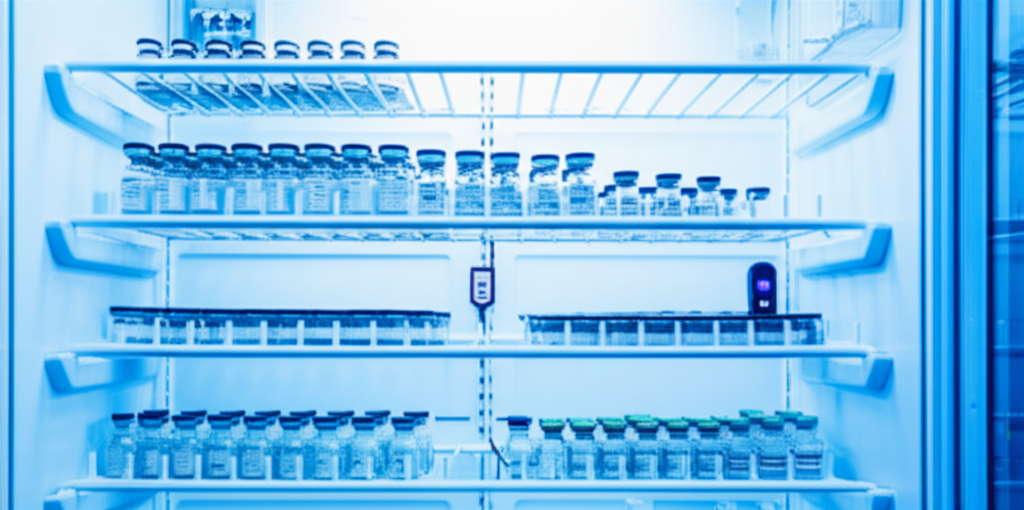
Mold growth in medical and pharmaceutical refrigerators represents a serious risk to stored product quality and regulatory compliance. Here is a comprehensive guide to prevent this problem.
Why Does Mold Develop?
Mold thrives under specific conditions:
- High humidity — Condensation and excessive moisture create a favorable environment
- Poor air circulation — An overloaded refrigerator prevents adequate circulation
- Organic residues — Uncleaned spills promote fungal growth
- Inadequate temperature — Fluctuations create condensation
Prevention Strategies
1. Maintain Stable Temperature
Temperature fluctuations cause condensation, creating a humid environment favorable to mold.
Recommendations:
- Use an ATEK monitoring system to detect variations
- Avoid opening the door too frequently
- Ensure the door seal is in good condition
2. Ensure Good Air Circulation
Recommendations:
- Don’t overload the refrigerator
- Leave space between products (minimum 2-3 cm)
- Don’t block circulation vents
- Follow spacing guidelines from the Vaccine Management Standards Guide
3. Clean Regularly
Recommended frequency:
- Weekly cleaning of interior surfaces
- Monthly deep cleaning
- Immediate cleaning of any spills
Recommended products:
- Water and baking soda solution
- Avoid harsh chemicals that can leave residues
4. Control Humidity
Recommendations:
- Use humidity absorbers if necessary
- Check the defrost system
- Ensure the drain is not blocked
5. Inspect Regularly
Checkpoints:
- Door seals (wear, mold)
- Hard-to-reach corners
- Grilles and vents
- Vegetable drawer and compartments
Warning Signs
Watch for these problem indicators:
| Sign | Action |
|---|---|
| Musty odor | Immediate inspection and cleaning |
| Black or green spots | Deep cleaning |
| Excessive condensation | Check temperature and seals |
| Wet products | Check humidity and circulation |
Impact on Compliance
The presence of mold can:
- Compromise the quality of stored products
- Result in observations during inspections
- Create health risks for staff
- Require costly decontamination
The Role of Monitoring
A monitoring system like ATEK can help prevent conditions favorable to mold by:
- Detecting abnormal temperature fluctuations
- Alerting on door faults (door left open)
- Providing trend data to identify recurring problems
- Documenting conditions for audits
Recommended Cleaning Protocol
Weekly Cleaning
- Remove expired or damaged products
- Wipe surfaces with baking soda solution
- Check door seals
- Clean spills
Monthly Cleaning
- Completely empty the refrigerator
- Clean all interior surfaces
- Disinfect seals and corners
- Check the drain
- Inspect grilles and vents
Conclusion
Preventing mold in medical and pharmaceutical refrigerators is essential for maintaining product quality and regulatory compliance. A combination of good maintenance practices, continuous monitoring, and rigorous cleaning protocols ensures an optimal storage environment.
Need help optimizing your monitoring? Contact ATEK for an assessment of your needs.
![Securing your Laboratory During Extended Absences [Practical Guide]](/images/blog/securing-laboratory-absences.png)